Add forensic billing audits to your service offering — white-labeled under your firm's name.
You present the findings. You collect the recovery share. Your client never knows we exist.
No expertise required on your end.
Your utility provider has no incentive to tell you when you've been overcharged.
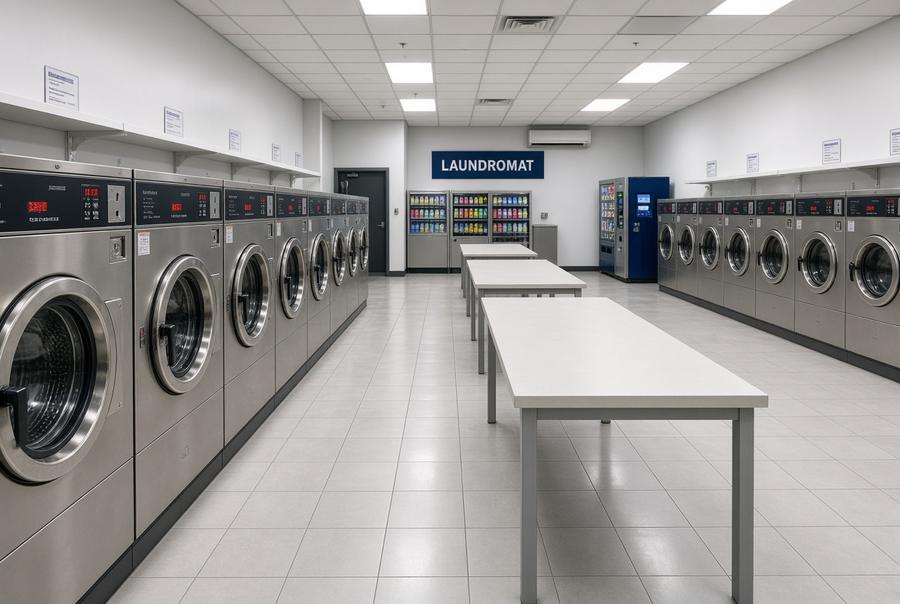
Laundromats, restaurants, warehouses, strip centers, and multi-tenant properties
routinely carry billing errors worth thousands of dollars — undetected for years.
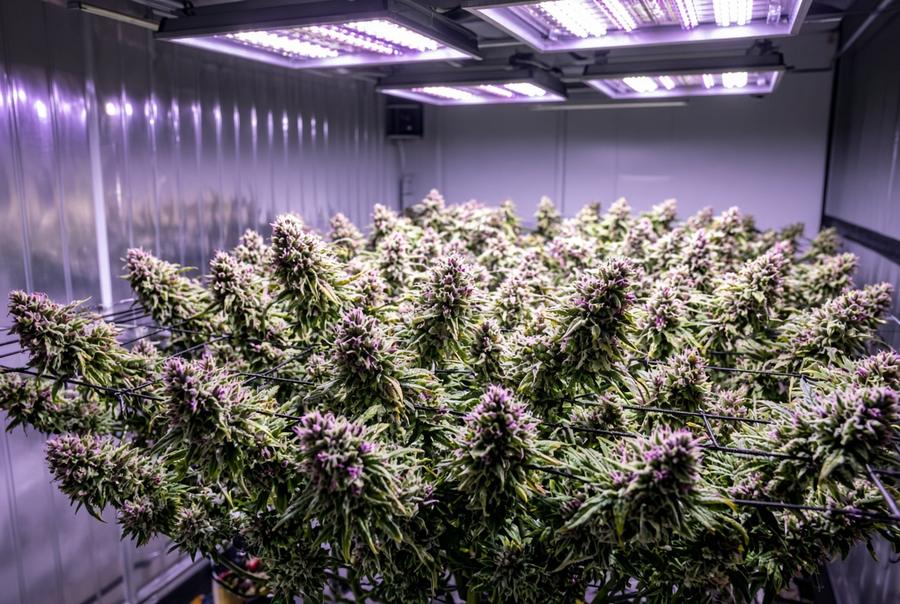
A licensed grow draws more power per square foot than almost any other commercial tenant
— usually on a rate class inherited from whatever the building used to be.
Energy is your second-largest operating cost and the one nobody has ever audited.
Your Brand.
Our Forensic Work. Your Client's Refund.
Ascendant Energy Advisors conducts forensic commercial utility bill audits
through broker partnerships. Every deliverable — the audit report,
refund demand letter, workbook, and client correspondence — is produced
under your firm's name. Your client never knows we exist.
Submit an account. We assess it at no cost and tell you what's recoverable. If the numbers are there, we produce the full audit package under your name and pursue the refund.
01
Submit the Account
Complete the broker inquiry form with account details — utility, state, type, and approximate monthly spend. Minimum 24 months of bills required.
02
Free Preliminary Assessment
We conduct a no-cost review and return a written assessment within 48 hours — estimated recovery range, likely findings, and applicable lookback period.
03
Full Forensic Audit
Line-item review of every statement against controlling tariffs. The complete deliverable package is produced under your firm's name — your letterhead, your logo, your signature.
White-Label Delivery
Your Clients See Your Work. Not Ours.
Every document we produce is attributed to your firm. Your letterhead. Your logo. Your name on the signature block. The audit findings become your findings. The refund recovery becomes your win.
⚖️
Your Brand, Your Credibility
Delivering a forensic audit deepens client relationships and reinforces your value as a full-service energy advisor. Your client never knows a third party was involved.
🔒
No Client Relationship Risk
Ascendant has no contact with your client. No upselling, no competing services, no future outreach. Every engagement agreement limits our scope exclusively to the billing audit.
📋
No Expertise Required on Your End
You don't need to understand tariff schedules or demand ratchets. We handle the technical work entirely. You present the results and collect your share.
Recent Findings
What Forensic Audits Actually Find.
These are representative findings from recent engagements. These errors exist in commercial accounts across every utility territory we work in — and they are never self-corrected by the utility.
Electricity — ConEdison, New York
Commercial Property, Queens · 26-Month Review
$49,399
Refund · Client-redacted documents available on request
Rate-Class Misclassification (13 months): Account billed under EL2 "General Small" despite peak demand of 70–148 kW — 7 to 14× the 10 kW eligibility ceiling. ConEd reclassified the account but issued zero retroactive credit.
Contract Demand Ratchet: Single-month peak reset Contract Demand to 153.76 kW against a 12-month rolling average of ~103 kW — a 49% inflation of the demand floor.
3-Year Combined Opportunity: One-time refund plus demand optimization totaling $73,000–$86,000.
Water & Sewer — City of Rockville, Maryland
100-Unit Nursing Home · 25-Month Review
$41,272
Refund · Client-redacted documents available on request
Non-Sewer Water (F-2): 2,322 kgal of water physically could not enter the sewer — primarily cooling-tower evaporation. Sewer charges were without legal authority under City Code §24-52(c).
Estimated Read Violations (F-1): 12 of 25 statements contained utility-estimated reads. The March 2026 estimate was 63.4% above the customer's 12-month moving average — presumptively non-compliant with §24-56(d).
Fee Structure
Transparent. Contingency-Based. No Recovery, No Fee.
All fees are contingency-based and paid from the recovery — never out of pocket. The split is fixed, disclosed in writing, and never renegotiated after engagement.
Worked Example — $50,000 Recovery
Total recovery from utility
$50,000
Client share (60%)
$30,000
Broker's contingency fee (40% of recovery)
$20,000
Ascendant's share (75% of fee)
$15,000
Broker's share (25% of fee)
$5,000
Submit an Account
Start with a Free Assessment.
Submit the account details below. We'll conduct a no-cost preliminary review and return a written assessment within 48 hours — estimated recovery range, likely findings, and a clear recommendation. No cost unless we recover.
Broker Account Inquiry
✓
Submission Received
We'll respond with a written preliminary assessment within 48 hours. No obligation to proceed.
For Business Owners
Your Utility Has Been
Overcharging You. We Can Prove It.
Commercial utility accounts contain billing errors that utilities never voluntarily disclose or correct.
Rate misclassifications. Improper demand charges. Unauthorized fees. Overcalculated taxes.
A forensic audit identifies what was overbilled — and puts money back in your account.
Utilities Bill Commercially. They Don't Audit Themselves.
Commercial rate schedules are complex — dozens of tariff provisions, demand calculations, and fee structures that change annually. Billing systems apply rules automatically, and when they apply the wrong rule, no one flags it.
📊
Wrong Rate Classification
Many commercial accounts are billed under the wrong rate schedule for months or years — often because the utility assigned a default classification at setup that was never corrected as the account's usage profile changed.
⚡
Demand Charge Errors
Electric demand charges — billed on your highest 15- or 30-minute peak — can be inflated by misread meters, improper ratchet provisions, or contract demand floors set far above your actual usage profile.
💧
Water & Sewer Overcharges
Businesses that use water for manufacturing, cooling, irrigation, or laundry often pay sewer charges on water that never enters the sewer system — a direct overcharge that can span years without detection.
🧾
Unauthorized Fees & Taxes
Late charges applied without proper notice, sales taxes assessed on exempt services, surcharges collected at incorrect rates — these small line items accumulate to significant overcharges across a 3–5 year lookback window.
📉
Meter & Estimation Errors
Faulty meters and improper estimation cycles — where the utility estimates rather than reads your meter — create billing periods that deviate wildly from actual consumption, almost always in the utility's favor.
🔍
Never Self-Corrected
None of these errors are ever proactively identified or corrected by the utility. The only way to recover overbilled amounts is through a formal forensic audit with documented findings and a legal demand for refund.
Industry Case Study
Why Laundromats Are Among The Most Overbilled Businesses in America
Coin laundry operations are high-intensity utility consumers — continuous electric draw, high hot-water volume, and extended daily operating hours. They attract billing errors at every level.
Wrong Demand Rate Class: A 3,400 sq. ft. laundromat operating 16 hours/day with 40 commercial washers and 30 dryers routinely registers 50–90 kW peak demand — far above the threshold for small-commercial flat rates. Accounts left on residential-adjacent schedules miss the optimized large-commercial tiers and are billed at penalty rates for demand they legitimately earned a lower price on.
Hot Water Sewer Exclusion: Laundromats that heat water on-site lose a significant portion of that water to evaporation through the wash cycle — water that never exits as drain discharge. Municipal sewer tariffs in most jurisdictions permit exclusion of this volume from sewer billing. Most laundromat owners are never told this provision exists.
Demand Ratchet Inflation: A single anomalous month — equipment malfunction, all machines running simultaneously during a power restoration — can reset an 18-month demand floor, inflating demand charges on every subsequent bill at no fault of the business owner.
Improper Late Fees & Surcharges: Billing system errors can apply late charges to accounts that paid on time, or assess tariff surcharges at rates that were superseded by regulatory filings the utility never communicated.
Any commercial account with monthly utility spend of $3,000 or more is a candidate for forensic audit. The following business types account for the largest share of confirmed overcharges.
🧺
Coin Laundries & Laundromats
High water volume, sewer exclusion eligibility, and intensive electric demand make laundromats one of the highest-yield audit categories. The average confirmed recovery in this sector exceeds $18,000 over a 36-month lookback.
🍽️
Restaurants & Food Service
Heavy HVAC loads, hood suppression systems, and kitchen equipment create complex demand profiles. Rate classification errors and demand ratchet provisions are common in this sector.
🏢
Multi-Tenant Commercial Buildings
Master-metered commercial properties and strip centers often carry rate errors at the common-area level that affect the ownership entity directly. Cooling tower and irrigation water exclusions are frequently applicable.
🏭
Light Manufacturing & Warehousing
Process loads and irregular production schedules produce demand profiles that rarely match the rate classes originally assigned. Demand ratchet provisions can persist for years on dormant contract demand floors.
🏨
Hotels & Extended Stay
Cooling tower sewer exclusions, pool water evaporation, and complex HVAC metering arrangements create multiple audit vectors in hospitality properties. Portfolio audits are available for multi-property owners.
🏥
Medical Offices & Outpatient Facilities
Sterilization equipment, imaging systems, and climate-critical environments produce high and irregular demand. Improper rate class assignment and phantom demand charges are common in this sector.
The Process
Four Steps. No Upfront Cost.
We start with a free assessment — no commitment required until we've identified a likely recovery and you've decided to proceed.
01
Submit Your Account
Complete the inquiry form below with basic account details — utility provider, state, business type, and approximate monthly spend. No bill upload required at this stage.
02
Free Preliminary Assessment
We review your account profile and respond within 48 hours with a written preliminary finding — whether an audit is warranted, what errors are likely, and our estimated recovery range.
03
Full Forensic Audit
If you choose to proceed, we conduct a line-item review of up to 60 months of billing against controlling tariff schedules and statutory authority. All findings are fully documented.
04
Demand & Recovery
We produce a formal refund demand letter with complete statutory citations addressed to your utility provider. We guide you through the submission process and any follow-up with the utility or state regulatory agency.
Your Business May Already Have Money Waiting to Be Recovered.
A free preliminary assessment costs you nothing and takes about ten minutes of your time. If there's no meaningful recovery, we'll tell you so in writing.
Submit your basic account information below. We'll review it at no cost and respond within 48 hours with a written preliminary assessment — estimated recovery potential, most likely findings, and our recommendation on whether to proceed. No fee until you decide to move forward.
Minimum account size: $3,000/month in utility spend across all utilities. Accounts in the $3,000–$5,000 range will be assessed individually — a full forensic engagement may not be warranted depending on findings.
Business Owner Inquiry
✓
Assessment Request Received
We'll review your account details and respond within 48 hours with a written preliminary assessment. No obligation to proceed.
For Licensed Cannabis Cultivation Operators
Your Second-Largest
Operating Cost. Never Once Audited.
Lighting, dehumidification, and process cooling run around the clock in a building
that was almost never designed for them. The load changed when you moved in —
the rate class, the metering, and the tax treatment usually did not.
Ascendant audits the bill against the filed tariff, on pure contingency.
Cultivation Draws More Power Per Square Foot Than Almost Any Commercial Tenant.
Utilities bill cultivation facilities on schedules written for warehouses, packing houses, and light industrial tenants. Nobody at the utility revisits the classification when the load multiplies, and nobody inside the facility is positioned to catch it.
⚡
Rate Class Inherited From the Prior Tenant
Most cultivation sites are retrofit warehouses and light-industrial shells energized decades ago for a tenant drawing a fraction of today's load. Utilities do not reclassify accounts on the customer's behalf — the small general service schedule stays in place while connected load multiplies.
📈
Demand Ratchets Set by a Single Hour
Many tariffs bill demand on a ratchet — a percentage of the highest interval recorded in the preceding eleven or twelve months. One simultaneous room flip, or one restart after an outage, can fix the billed demand floor for a full year on a facility that never operates near that peak again.
🧾
Utility Sales Tax Exemptions Never Filed
Many states exempt utility consumed directly in manufacturing or processing, subject to a predominant-use study on the meter. Operators are frequently told the agricultural exemption does not apply and stop there — leaving the manufacturing and processing exemption unexamined and full tax paid on every kWh and therm.
💧
Sewer Charged on Water That Never Returns
Fertigation uptake, plant transpiration, evaporative cooling, and RO reject mean a large share of purchased water never enters the sanitary system. Most municipalities allow a deduct meter or an evaporation credit. Very few cultivation facilities have one, and sewer is billed on 100% of water throughput indefinitely.
Cultivation Focus
Where the Money Hides in a Grow Facility
Each item below is a line on the bill or a term in the tariff — not an operational recommendation. We audit what you were charged against what the filed tariff permits.
💡
Lighting Load & Photoperiod Timing
Canopy lighting is the anchor load and it runs on a fixed schedule. Where the tariff carries time-of-use periods or a coincident-peak demand component, the relationship between the light schedule and the utility's peak window is worth real money — and it is set by a timer, not a retrofit.
❄
HVAC & Dehumidification
Latent load in a flowering room approaches the lighting load itself. Chillers, dehumidifier banks, and air handlers stack against the lighting peak instead of offsetting it, which is what drives the demand component on most cultivation bills.
🔌
Power Factor & kVA Billing
Electronic ballasts, LED drivers, and variable frequency drives on fans and pumps produce a load profile that triggers power factor penalties and kVA-based demand on schedules written for motor load. We verify the penalty was correctly calculated and correctly applicable.
🧮
CT Ratios & Meter Multipliers
Build-out to a 1,200–4,000A service means new instrument transformers and a new multiplier keyed into the billing system by hand. A transposed multiplier is not self-correcting and can survive for years. Verifying it against the meter test record is a standard step in every audit we run.
🏭
Standby, Supplemental & Redundancy Riders
Facilities with backup generation, cogeneration, or on-site solar are frequently moved onto standby or supplemental service riders. Those riders carry their own demand determinants, and applying them to a site that does not meet the rider's own definition is a recurring error.
🛂
Water, Sewer & Private Fire Line
Fertigation, chiller makeup, and RO reject move large volumes through a single service. Alongside the sewer deduct question, private fire line charges, unmetered irrigation taps, and misapplied stormwater impervious-area assessments all appear on cultivation accounts.
Representative Findings
What Cultivation Audits Typically Uncover
The findings below are representative of the error categories that recur on cultivation accounts. Dollar figures are modeled estimates, not client results. Every figure in a delivered report is tied to a specific bill, a specific tariff sheet, and a specific meter read — we assert nothing we cannot substantiate from source documents.
Electricity — Licensed Indoor Cultivator
Single Facility · 48-Month Forensic Review
Modeled Estimate
Illustrative — not a client result
Rate Schedule Inherited From Prior Use: Service established for a distribution warehouse and never revisited after cultivation build-out. Demand moved from roughly 60 kW to over 800 kW while the account remained on a small general service schedule with a demand structure written for a far smaller customer.
Ratchet Set During Commissioning: A single interval recorded while all rooms were energized simultaneously during commissioning established a billed demand floor carried for the following eleven months, across periods when actual demand never approached it.
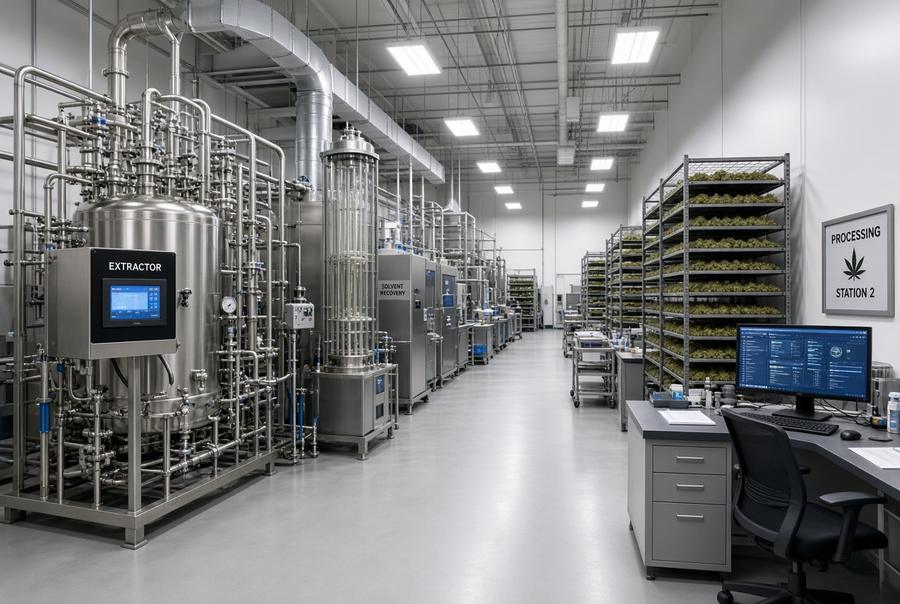
Sales Tax on Consumption Used in Processing: No predominant-use study had ever been filed. Where state law extends a manufacturing or processing exemption to utility consumed in production, the exemption applies prospectively and, in most states, supports a refund claim for the open lookback period.
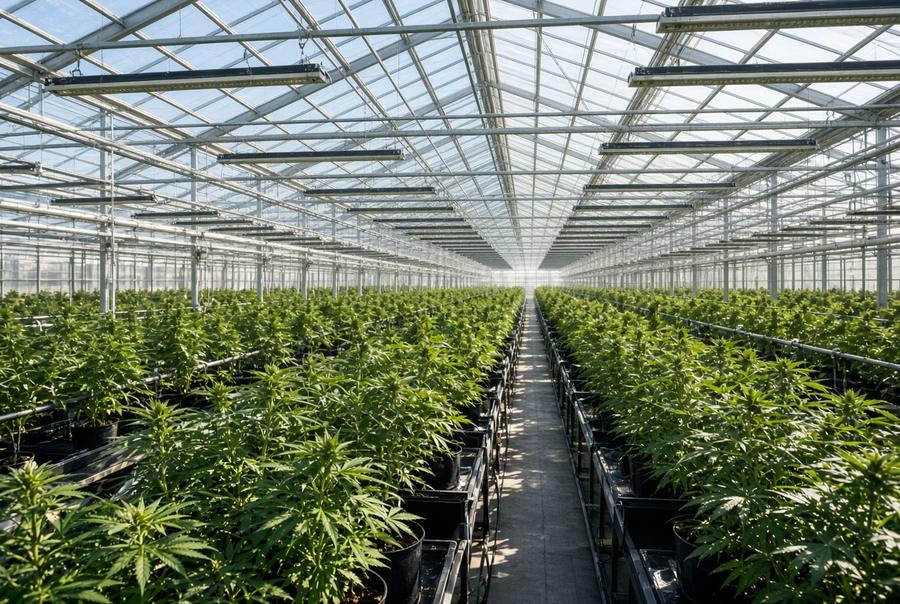
Water, Sewer & Electric — Greenhouse / Mixed-Light Operator
Single Facility · 60-Month Forensic Review
Modeled Estimate
Illustrative — not a client result
Sewer Billed on Water That Never Discharged: Irrigation uptake, transpiration, and evaporative cooling accounted for a substantial share of metered water volume. No deduct meter was installed and no evaporation credit had been claimed across the full review period, despite the municipal code providing for both.
Power Factor Penalty on a Non-Motor Load: Penalties assessed monthly under a schedule provision written for induction motor load, applied to a facility whose profile is driven by lighting drivers and VFDs. Both the applicability of the provision and the arithmetic of the penalty required verification against the filed tariff.
Meter Multiplier Never Verified After Service Upgrade: The service was upgraded and re-metered through new instrument transformers. The multiplier applied in billing was never reconciled against the meter test record filed at the time of the upgrade.
The Process
You Are a Regulated Utility's Commercial Customer.
Whatever else is complicated about this industry, the utility relationship is not. A state-licensed operator is a commercial ratepayer with the same tariff protections, the same refund rights, and the same access to the state commission complaint process as any other business on the same schedule. All fees are contingency-based — no cost unless we recover.
01
Free Preliminary Assessment
Send recent bills and basic account information. We review the account profile and return a written assessment within 48 hours — no cost, no commitment. Account records are handled confidentially and are not shared outside the engagement.
02
Engagement Agreement
Contingency-based, disclosed in writing, percentage-based against actual recovery, and payable only when the utility issues a refund or credit. No retainer and no audit fee, which keeps the engagement outside the capital and banking constraints most operators are working under.
03
Full Forensic Audit
A line-item review of every billing period in the applicable lookback window, comparing each charge against controlling tariff schedules, rate orders, and statutory authority. Findings are documented with specific citations for each identified error.
04
Demand, Recovery & Regulatory Support
We produce a formal refund demand letter addressed to the utility and provide submission support. If the utility denies the claim, we assist in filing a regulatory complaint with the applicable state commission — at no additional cost.
Margin Compression Is the Whole Story in This Industry Right Now.
Wholesale prices are set by the market and taxes are set by statute. The utility bill is the one major line item where the amount you are charged can be wrong — and where being right about it is recoverable. A forensic audit requires no internal resources and no upfront expenditure.
Submit your account information below. We'll conduct a no-cost preliminary review and respond within 48 hours with a written assessment — estimated recovery potential, most likely findings, and a recommendation on whether to proceed.
Portfolio assessments are available for operators running multiple licensed sites or separately metered buildings. Provide general monthly spend if account details are not immediately at hand — we can refine from there. All submissions are treated as confidential.
Cultivation Operator Inquiry
✓
Assessment Request Received
We'll review your account profile and respond within 48 hours with a written preliminary assessment. No obligation and no cost to proceed.
 A Founding Member